Full-Cycle Operation and Maintenance Strategy – Key Practices for Extending the Service Life of Ceramic Fiber Filter Tubes
Full-Cycle Operation and Maintenance Strategy – Key Practices for Extending the Service Life of Ceramic Fiber Filter Tubes
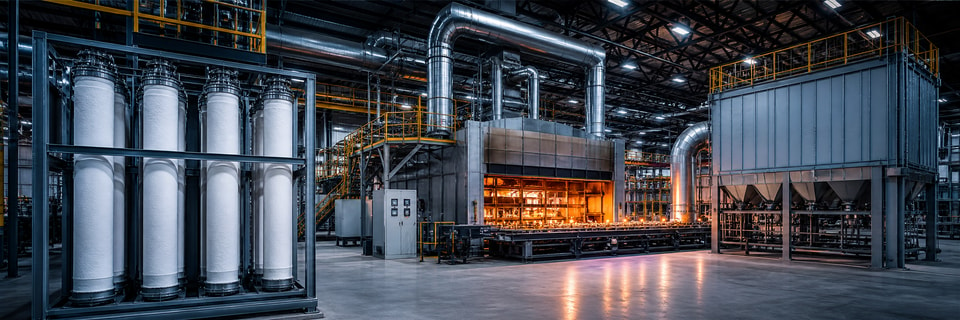
The service life of ceramic fiber filter tubes in practical applications depends not only on product quality but also significantly on installation quality, operational regulation, and maintenance thoroughness. During the installation phase, precise positioning must be performed on the tube sheet flatness, sleeve verticality, and sealing gasket alignment within the dust collector casing, ensuring that each tube is vertically inserted and concentric with the tube sheet holes to prevent tilting or sealing gaps caused by installation deviations. After installation, a cold-state airtightness test should be conducted to check for any leakage at all connection points.
During operation, operators should pay close attention to key indicators including system pressure drop, flue gas temperature, and cleaning parameters. It is advisable to set reasonable cleaning pressure and pulse intervals based on actual operating conditions, avoiding both overly frequent cleaning that may cause fatigue damage to the tubes and insufficient cleaning that leads to continuously rising resistance. Generally, when the pressure drop is maintained within a specified range, the system operates most economically and reliably. Temperature monitoring is equally important—although the tubes have high-temperature tolerance, extreme temperatures exceeding their safe upper limit can still cause structural damage to the fibers. Therefore, temperature warning devices and contingency plans should be in place. Routine maintenance planning should include visual inspections weekly, pressure drop data recording and analysis monthly, cleaning system functional verification quarterly, and comprehensive system shutdown inspections annually. During inspections, special attention should be given to cracks, abrasion, or perforations on the outer surface of the tubes, aging of seals, and smooth ash discharge from the hopper. Tubes with minor damage may be locally repaired, while those with severe damage require timely replacement. By establishing a scientific full-cycle operation and maintenance record system, the degradation trend of the filter tubes can be accurately assessed, and the optimal replacement timing can be predicted, thereby minimizing operating costs while ensuring emission compliance.